Travertine Sealing in Florida: Complete Guide for Homeowners
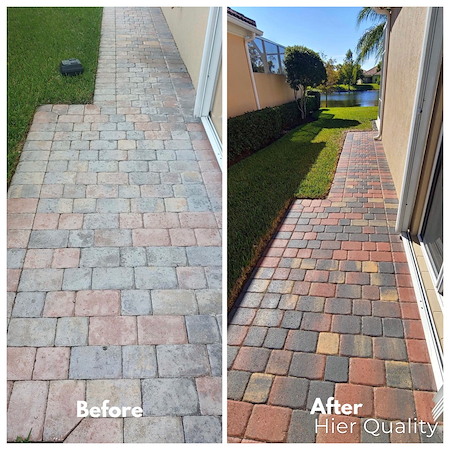
Florida’s bright sun, high UV, salty air, and daily summer showers are tough on natural stone. If you own travertine pavers, you need a plan that balances beauty, safety, and durability. This guide explains how Hier Quality Roof Cleaning & Pressure Washing approaches travertine sealing in Florida so your pool deck, patio, or driveway stays cleaner, cooler, and less slippery. For details on our full process, see our paver sealing service.
Why Travertine Needs Sealing In Florida
Travertine is porous, which means it drinks in water, sunscreen, rust, and leaf tannins. In Florida, intense UV fades color faster, and warm, wet joints invite mold and algae. Sealing helps block stains, slows erosion from rain, and supports joint stability around pools and patios.
Sealers also make cleaning easier between professional residential pressure washing visits. That matters during the long rainy season when grit and organic growth show up quickly on light stone.
Water-Based Penetrating vs. Solvent-Based Topcoat Sealers
Most homeowners ask which sealer type works best in our humid climate. Here’s how pros look at it for Florida travertine:
- Water-based penetrating sealers soak into the stone, stay breathable, and keep a natural look. They help resist stains and make the surface easier to rinse. Because they do not form a thick film, they usually keep pool decks cooler underfoot.
- Solvent-based topcoats (often called “film-forming” or “wet look”) sit on top. They can deepen color and add sheen, but they are less breathable. On dense, light travertine, a heavy film can trap moisture and lead to whitening or peeling in Florida’s humidity.
If you love the “wet look travertine sealer” style, a measured approach is key. Many homeowners choose a penetrating base for breathability, then a light, professional-grade topcoat with traction added where safety is critical. Others prefer a premium penetrating-only system for the most natural appearance. The “best travertine sealer for a humid climate” is the one that manages moisture first, then matches your look and slip needs.
Breathable, penetrating sealers reduce the chance of white haze on travertine. They are often the first choice for pool surrounds and sun-drenched patios across the state.
Keeping Pool Decks Cooler And Safer
Florida pool decks can get hot. Travertine helps, but sealer choice also matters. Penetrating sealers do not create a skin that traps heat, so they typically feel cooler underfoot. Film-forming topcoats can darken the stone and raise surface temperature, especially in full sun.
Safety counts too. To help prevent pool deck slipping on travertine, pros use light-profile traction additives in topcoats or stick with penetrating-only systems that don’t create a slick film. Texture, grout lines, and proper joint care also play a role. A safe finish should improve grip without feeling gritty.
Scheduling Around Florida Rain And Humidity: Drying Windows That Work
White haze after sealing usually comes from moisture trapped under a non-breathable film or applying any sealer too soon after rain. In Florida, timing is everything. Here’s how professional crews plan:
Always schedule sealing around a clear multi-day dry window. In our climate, a practical target is a 48 to 72-hour period with no rain on the surface and no storms forecast shortly after application. High humidity slows cure times, so crews plan extra time for evaporation, avoid early-morning dew, and work when the pavers are fully dry to the touch and shaded moisture has lifted.
Pool decks and shady lanais stay damp longer than driveways. That is why a site evaluation matters. The goal is simple: start with dry stone and joints, then allow enough cure time so the sealer can set without trapping moisture. Sealers are not waterproofing; they slow water and stain absorption. Good airflow and the right weather window boost results.
Local tip: Florida’s rainiest stretch often runs late spring through early fall. Booking your sealing a bit before or after the peak helps secure longer dry windows and smoother cures. Flexible scheduling saves return trips and protects your finish.
Mold, Efflorescence, And White Haze: What To Watch For
Travertine joints can hold moisture and nutrients. That is why mold returns fastest in shaded, low-airflow spots. A breathable system helps water escape while making routine rinsing more effective. During prep, pros lift algae and remove residue so the sealer bonds to clean stone, not growth.
Efflorescence is another Florida reality. It looks like fine white powder from salts moving up through the stone or base. If a heavy film traps that salt, whiteness can bloom under the coating. Breathable, penetrating systems lower this risk. When a sheen is desired, a thin, high-solids topcoat with traction can still work if the surface is truly dry and the weather window is right.
How A Florida Pressure Washing Team Handles Professional Sealing
As a pressure washing provider, Hier Quality Roof Cleaning & Pressure Washing focuses on clean, dry, and controlled conditions before any sealer touches your travertine. We stage work so rinse water, splash from planters, and sprinkler cycles do not interfere with curing. Our crews assess sun exposure, shade patterns, and airflow so the finish cures evenly and looks consistent.
We also talk through your goals. Want richer color with a soft satin glow? Prefer a natural, matte look that stays as cool as possible? Do you host pool parties and need extra traction around steps and tanning ledges? The right product pairing and film thickness matter. If you need a deeper dive into the service basics, explore our paver sealing overview.
Maintenance Timeline And Signs You Need A Refresh
Sealer life varies by sun, water exposure, and foot traffic. Pool splash zones and south-facing sections fade first. A simple visual check helps you plan your next service window.
- Water no longer beads on contact and soaks in quickly, leaving a dark spot that lingers.
- Color looks chalky or flat in high-traffic paths compared to shaded edges.
- Algae returns faster even after routine cleaning, especially in the joints.
- Traction feels slick when the surface is wet, especially on steps or near pool coping.
Between appointments, gentle rinsing and shade management help. Blowing off leaves reduces tannin marks. When your deck sees heavy use or storm debris, scheduling a professional clean through our residential pressure washing team resets the surface before the next sealing cycle.
Appearance Options: Natural Matte To Subtle “Wet” Look
Florida homeowners usually choose one of two styles. Natural matte keeps the stone’s original tone with little to no change and typically stays coolest. A subtle wet look deepens color and adds a light sheen. The key is balance. In humid zones, thinner, high-performing films or penetrating-only systems protect while lowering haze risk.
If you manage a resort, clubhouse, or HOA with wide walkways, our commercial pressure washing services can prep large areas efficiently so the chosen finish looks even across all sections.
Managing Joints For Cleaner, Stronger Edges
Joints are the lungs of a paver system. They let vapor escape and help lock the field in place. In Florida, joints can also be where weeds and algae thrive. During prep, professional cleaning clears organics and lifts old residue so joints can be refilled or stabilized as needed. That stability supports the sealer’s performance and improves day-to-day cleanup around pools and lanais.
For homeowners who want the longest interval between visits, pairing joint care with a breathable sealing strategy is a smart move. It protects the edges where staining and growth start first.
Heat, UV, And Color: Setting Expectations
Florida UV is relentless. Any finish lives in that reality, so even the finest sealers need periodic refresh. Light travertine reflects heat better and shows stains sooner; darker stones run warmer but hide dirt. Your choice of matte or satin should consider both how it looks and how it feels at 2 p.m. on a July afternoon in Tampa, Miami, or Orlando.
If your home sits near salt air, we’ll keep that in mind too. Salty mist can leave deposits that dull the look over time. A breathable system plus routine rinsing helps manage it.
Planning Your Project With Florida Weather In Mind
Coordinating with the forecast is the most important step for success. The target is a clean, dry start and a calm, dry finish. That often means midweek work when storms are less likely and enough buffer remains before weekend use. Landscaping schedules and irrigation are part of the plan so sprinklers do not mist the surface while it cures.
If you are comparing providers, ask about their weather policy and cure timing. Look for a team that confirms shade patterns, tests for surface dryness, and is willing to reschedule if conditions shift. That flexibility protects your investment and delivers better-looking results across the entire deck.
Choosing A Partner You Can Trust
With travertine, experience matters. Florida’s climate rewards breathable systems, careful prep, and realistic cure windows. Hier Quality Roof Cleaning & Pressure Washing is a pressure washing and sealing team that treats moisture management as a priority, not an afterthought. We tailor the system to your deck’s sun, shade, and slip needs so it stays beautiful through storm season and beyond.
If you want to learn more about travertine paver sealing in Florida and how it fits your space, our team is here to help with a site visit and a clear plan.
Get Your Travertine Ready For Florida Weather
Protect your pool deck, patio, or driveway with a finish that stands up to heat, UV, and sudden showers. Talk with Hier Quality Roof Cleaning & Pressure Washing about a breathable system, traction where needed, and a weather-smart schedule that helps prevent haze. For a deeper look at our process, read about our professional paver sealing, then call 321-358-6222 to plan your project.
Get a Free Quote Today From Melbourne's Top Pressure Washing Company